|
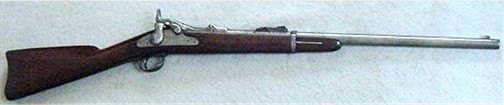
MODEL 1873 “FIRST MODEL” .45/70 SPRINGFIELD
TRAPDOOR CARBINE – VERY NICE EARLY PRODUCTION SPECIMEN –
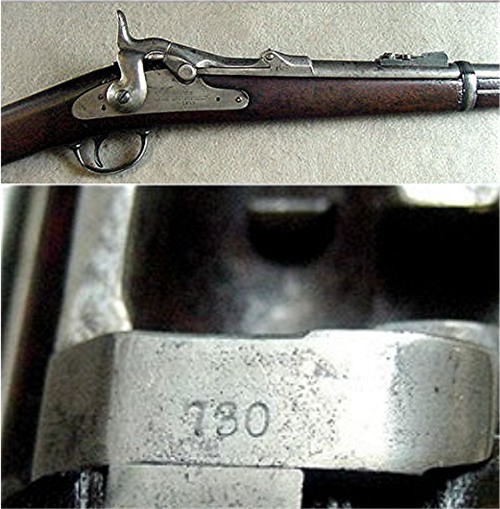
ca. 1874 – SN 730 – IN THE ORIGINAL CONFIGURATION:
This Model 1873 “First
Model” Springfield Trapdoor Carbine, Serial Number 730,
has survived in very nice condition with all of the
correct components and features. While often referred
to by the collecting community as a “Custer” era carbine
– that is a carbine manufactured early enough to have
been available for issue to the ill-fated soldiers of
the 7TH Cavalry prior to the Little Big Horn
– this carbine represents a much more exclusive
association as having been among the first Model 1873
Carbines shipped from Springfield Armory to be issued to
the units in the field.
Based on the production chart provided on page 155 of Al
Frasca’s The .45-70 Springfield, Volume II , this
carbine was manufactured in the 2ND Quarter
of Fiscal Year 1874 (the Fall of calendar year 1873).
Frasca notes the presence of certain features which are
notably present on this carbine – the Type I thumb
latch, early wide-faced firing pin, and the absence of a
stacking swivel – serve to indicate a carbine which was
shipped from Springfield in the December, 1873 –
January, 1874 time frame. The presence of these
features on this carbine confirms it was included in one
of the earliest shipments to the arsenals and depots for
issue to the units.
Serial Numbers of U.S. Martial Arms, Volume II
published by the Springfield Research Service, lists
several Model 1873 Carbines in the serial number range
of 51 into the 3,000’s which were confirmed to have been
issued to the 4TH, 6TH, and 10TH
Regiments of U.S. Cavalry in 1874 and 1875, with the
preponderance of those documented issues occurring in
the 10TH Cavalry. Most notably, Model 1873
Carbine Serial Number 736 was issued in Company B, 10TH
Cavalry, on May 25, 1875.
The historic record has long confirmed that the 10TH
Cavalry received the first issues of the Model 1873
Carbines and the Model 1873 Colt Pistols. How this
regiment came to be the first to receive these issues
has been credited to the manner in which the soldiers of
the 10TH cared for and maintained their
equipment in the years between the regiment’s creation
in 1866 and the adoption of these new arms. During this
period, the 10TH was certainly in a position
to be noticed. During the winter of 1867-1868, the 10TH
was engaged in General Phillip Sheridan’s campaign
against Black Kettle’s Cheyenne throughout the Indian
Territory and into northern Texas. A few years later in
1872, General of the Army Sherman conducted an
inspection tour of the forts in Texas and the Indian
Territory, visiting several posts where elements of the
10TH were garrisoned. Both of these generals
were left with a favorable impression of the regiment
through their appearance, discipline, and performance in
the field in numerous actions against the hostiles.
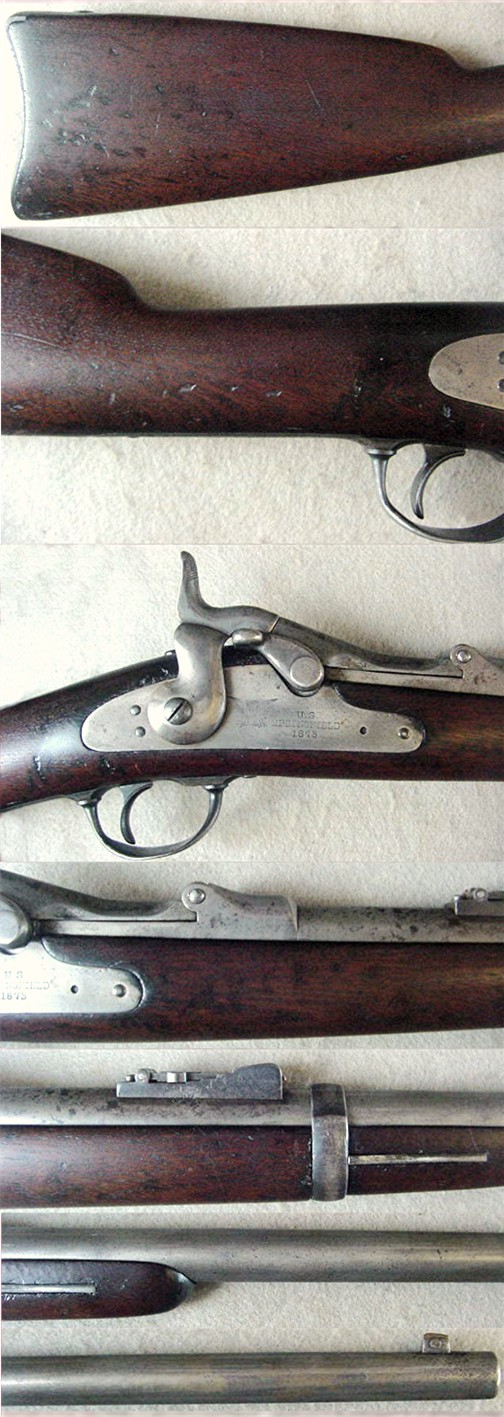
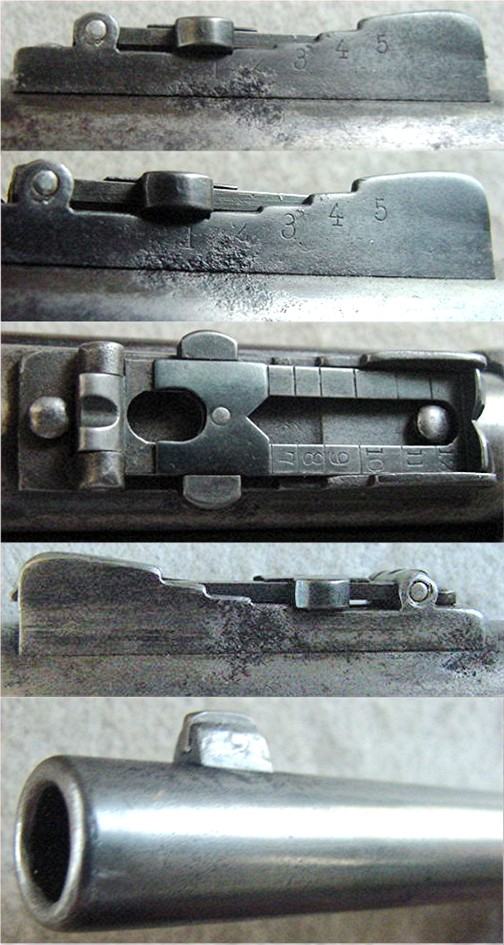
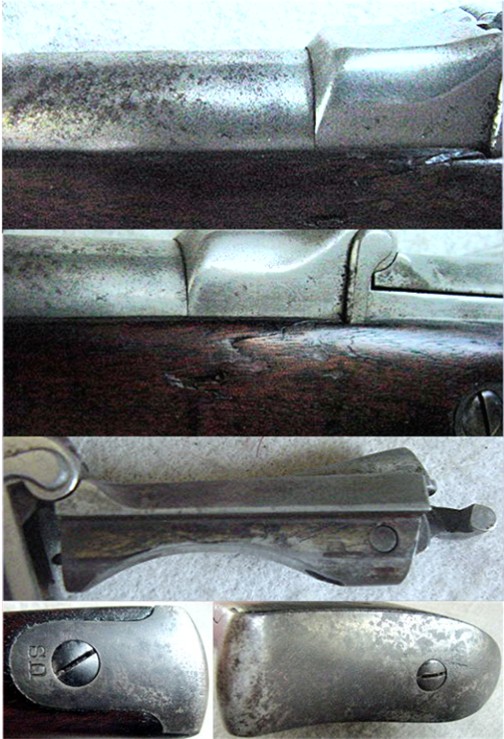
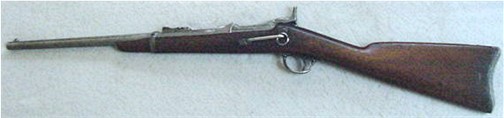
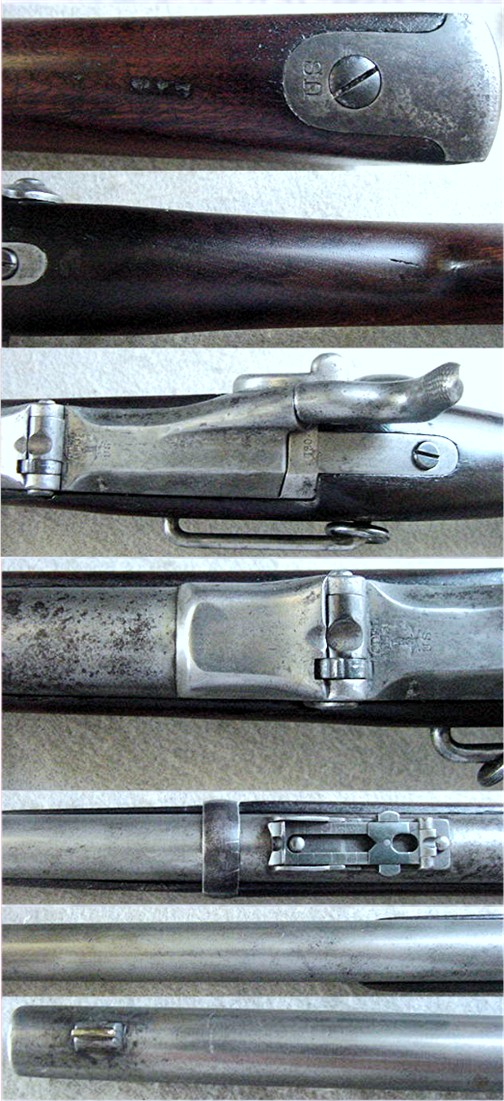
This carbine has retained all of the correct features of
an early production carbine to include: no proof marks
on the barrel at the breech, the high arch breech block,
the Model 1873 carbine rear sight mounted with slotless
screws, the coarse knurled hammer, the two position
tumbler, the smooth trigger, barrel band without the
stacking swivel, and most importantly, the proper long
wrist-short comb carbine stock.
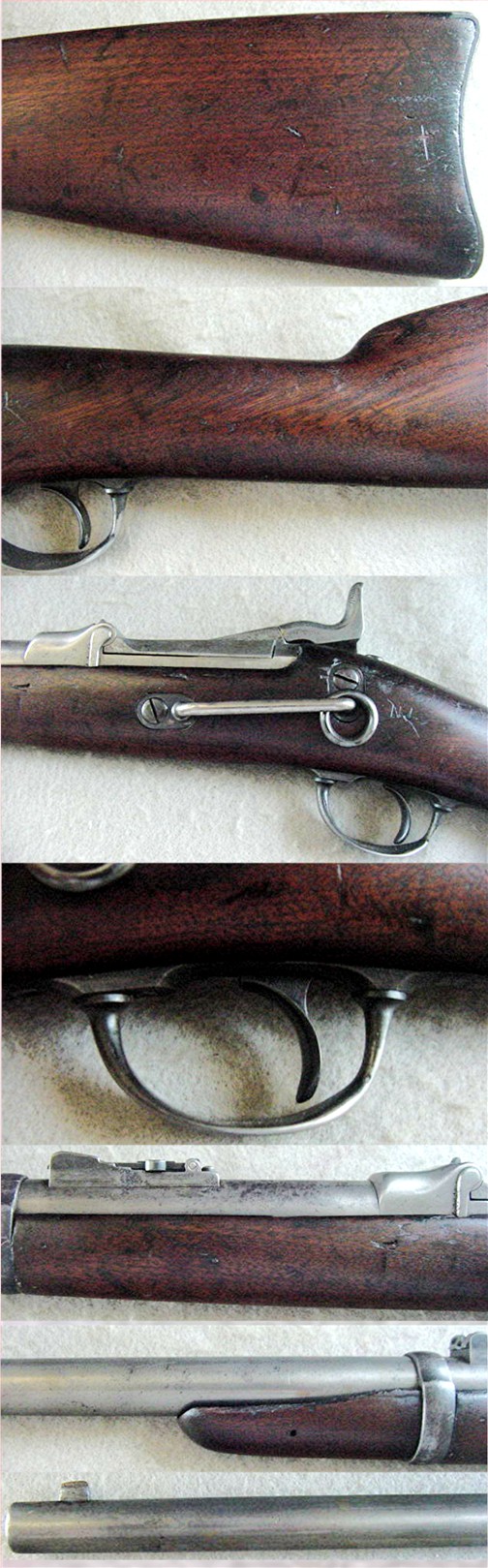
The mechanical lock and
trigger function is very crisp. The bore is very good
to excellent with bright, distinct rifling with no
pitting. The exterior metal surfaces are smooth overall
with some light pitting concentrated on the barrel
between the breech and the rear sight, but none of the
pitting is significantly heavy or unsightly. The
balance of the metal surfaces has an even aged
appearance.
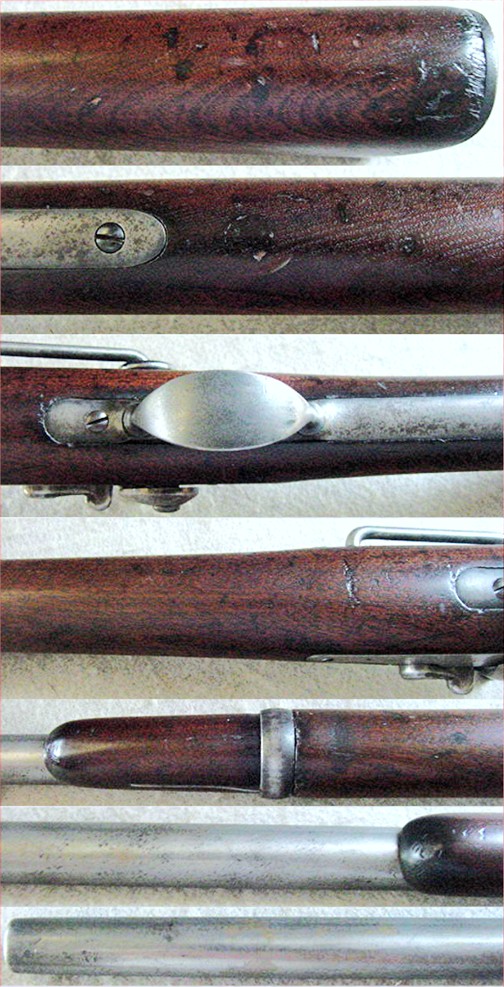
The stock was most likely refinished at some time in the
past, now being overall smooth with the normal handling
and storage marks. There is a sliver of wood missing
from the top edge of the left side of the barrel
channel, forward of the barrel band. This is something
that happened long ago, probably during the period of
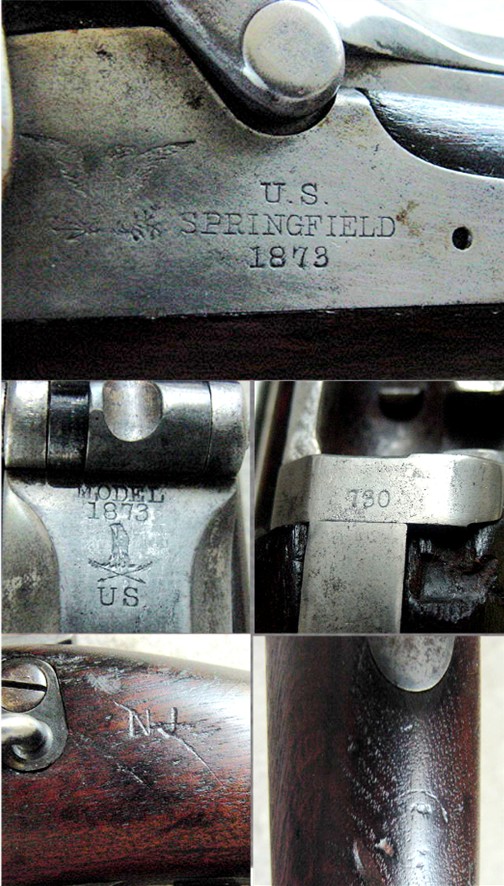
service. The circled P proof stamp is present and
lightly legible below the trigger guard. The cartouche
did not survive the wear of the carbine sling snap
swivel, or the possible later refinishing. The expected
location of a cartouche is stamped with a small “NJ”,
possibly indicating this carbine was eventually reissued
in the New Jersey State Militia.
This carbine has been intact as it presents for many
years, having resided in the same collection for quite
some time, and it is a very respectable example of a
very desirable early production Model 1873 Carbine which
was very likely among the first issues to the 10TH
Cavalry Regiment. Quite honestly, if I were still
looking for such an early specimen for my own
collection, this one would never see the light of day.
(0615) $6,575
|