|
MODEL 1841 “MISSISSIPPI” RIFLE
SHOWING STRONG EVIDENCE OF INDIAN OWNERSHIP AND USE -
EXCELLENT SPECIMEN:
A little preface to put this one
in context. For a number of years I, and others who
have studied firearms used by Indians on the American
Frontier, have noticed a substantial number of
Mississippi Rifles that exist in private and public
collections which show distinct, classic evidence of
Indian use.
For example, the Rock Island
Arsenal collection of documented surrendered and
captured Indian guns includes a significant number of
Mississippi Rifles. The Model 1841, or Mississippi
Rifle, was a sturdy, dependable, serviceable firearm,
originally intended for use on horseback - therefore
made in a handy, manageable length, featured a
substantial caliber appropriate to the wild game and
warfare in the West, and it presented well with the
attractive brass mounts. For all these reasons and of
course due to the Model 1841's passing into the surplus
market after the Civil War, it is apparent that these
rifles were a common item of trade to the Indians and
were well received by them.
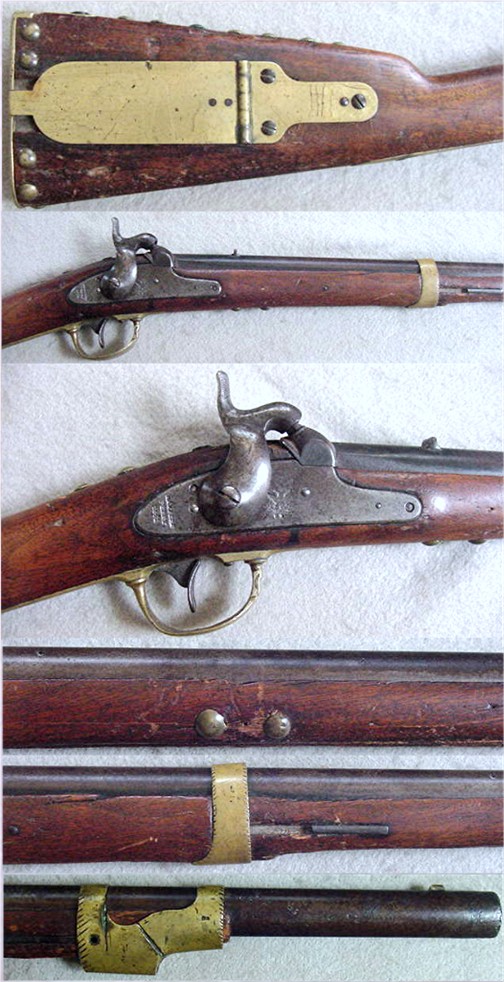
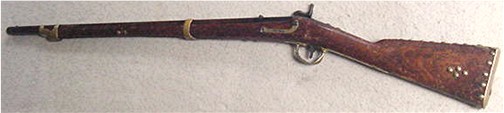
This Mississippi Rifle shows all the classic
characteristics of hard use in the hands of an Indian
and its appearance speaks volumes of its time on the
frontier.
The stock has all of the
desirable, excellent wear where one would expect to find
it - on the high edges of the barrel and ramrod channels
and at the points where the rifle would have been
handled or rested as it was carried on horseback. The
surface of the wood of the butt stock shows excellent
wear, with the lower edge of the patch box and the edges
of the butt plate standing in relief above the
surrounding wood. The wood has wonderful aged feel and
very nice coloring. The iron all has the same brown
surface – not encrusted with rust, but with a nice even
color, and the brass furniture has a consistent mellow
patina.
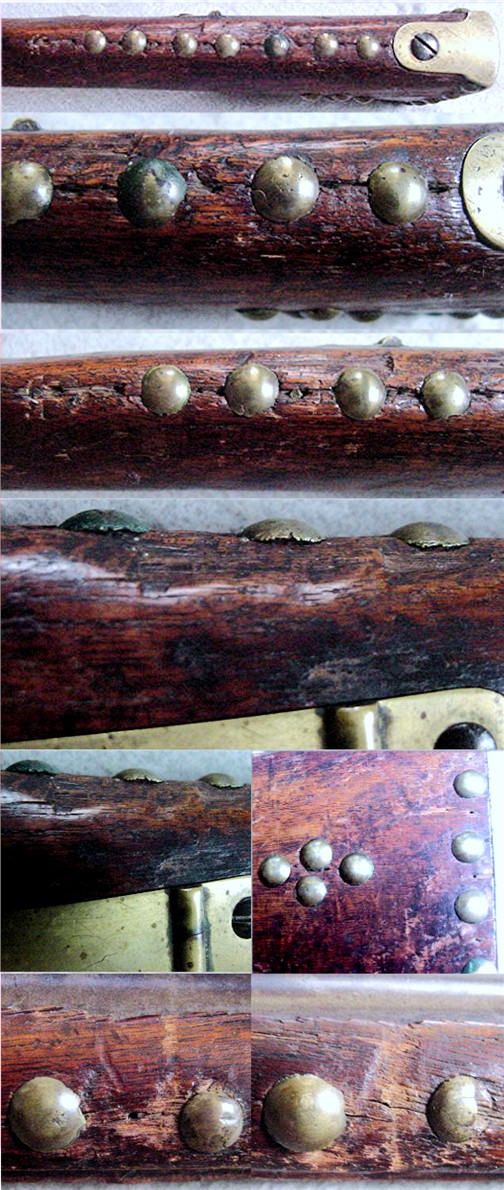
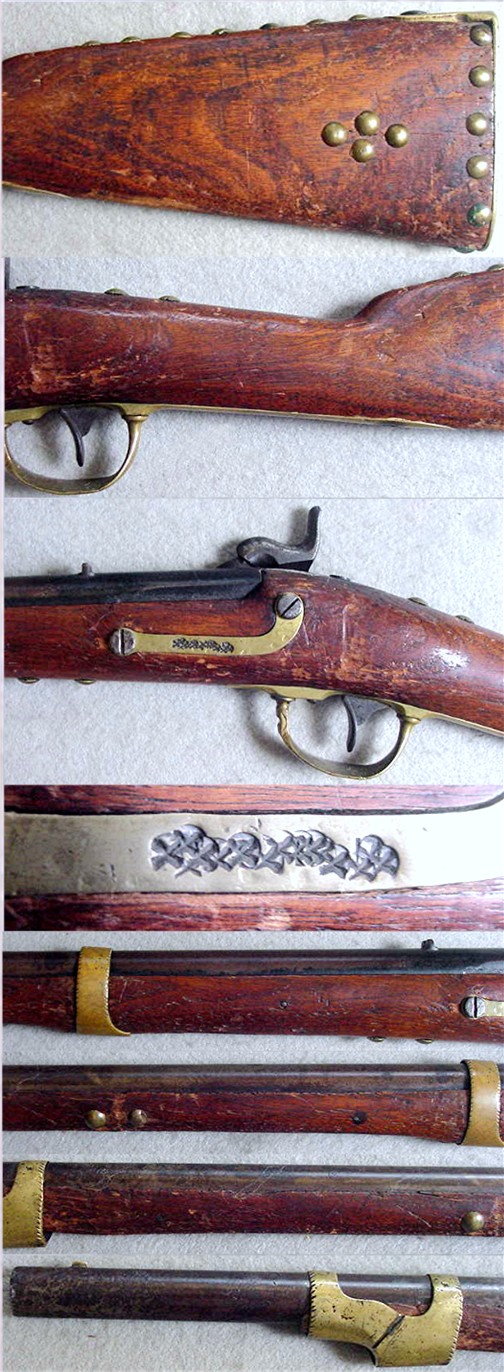
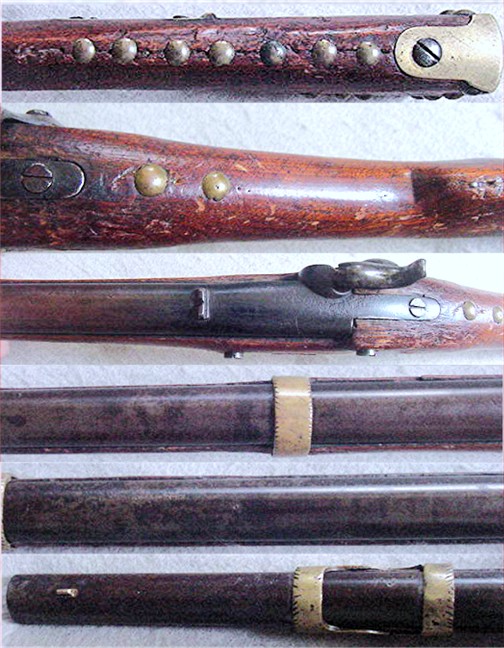
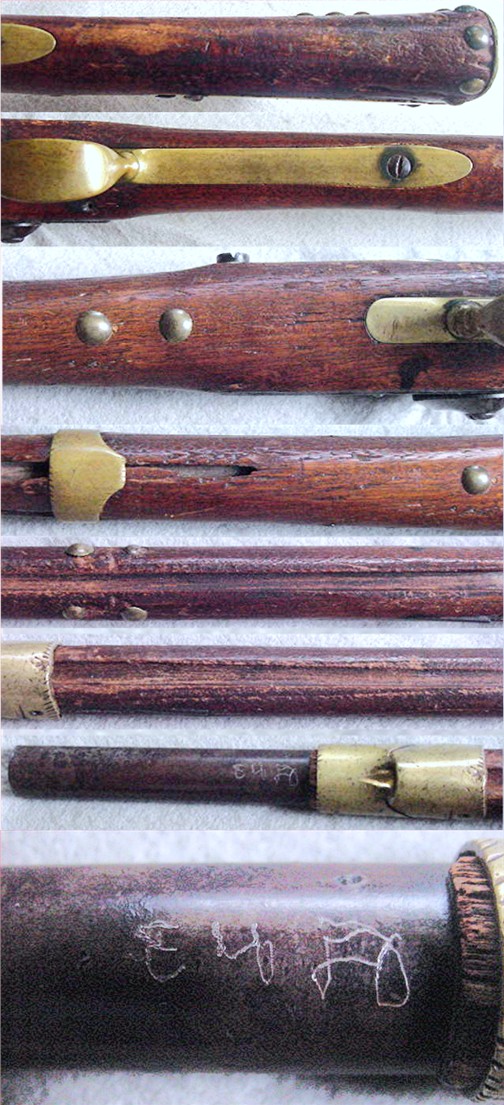
The comb of the butt stock, the bottom edge of butt
stock adjacent to the edge of the butt plate, the left
side of the butt stock, the top of the wrist, and both
sides of the forearm are decorated with brass headed
tacks with integral cast brass square shanks. There is
wear to the wood between and around the edges of the
tack heads and the heads have the appearance of being
married to the wood, evidence that over time the wood
has swollen around the edge of the tack heads - one of
the characteristics that knowledgeable collectors look
for to determine if the tacks have been recently
applied.
I have not pulled any of the
tacks, but I have applied a magnet to all of the tacks
and found no indication of steel shanks, and there is a
tack head missing from the comb, which left a square,
brass shank visible in the wood. The tacks along the
comb were apparently pulled at one time – from the looks
of it, during the period of the rifle’s use – and either
repositioned because they had loosened or replaced by
the owner. Indian used guns which were tacked at one
time and had the tacks removed are fairly common. The
reason for removing them is unknown, but it could
something as simple as the Indian who owned the tacked
gun had a more pressing need for them on something else
– such as his wife having other plans for them. This is
not a recently tacked gun where someone attempted to
“sweeten” an old, worn out rifle, rather these tacks
were certainly applied during the period of the rifle’s
use and show the same wear and character of the rifle.
The number of tacks and their positioning on this rifle
is consistent with other genuine Indian decorated guns
and do not have that artificial or questionable effect
in appearance.
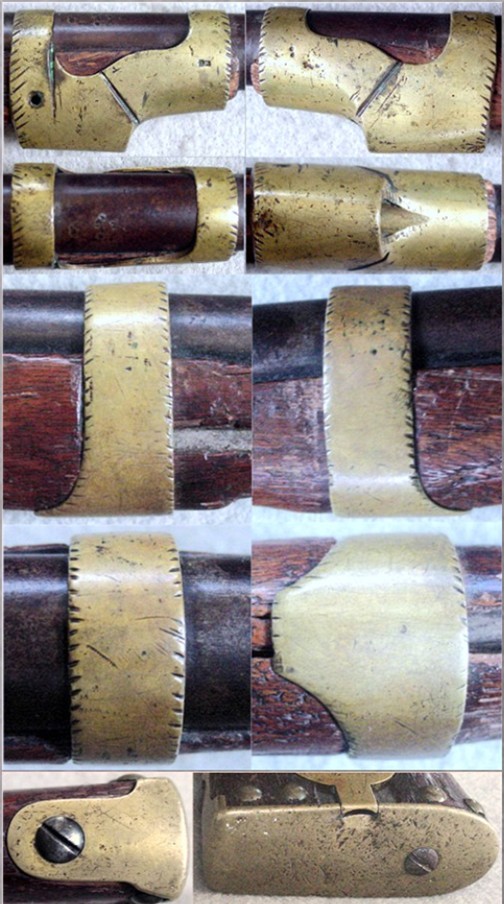
Another
indication of Indian ownership of this rifle is the
simple hash mark decoration around the edges of both
barrel bands. The marks are hand applied, perhaps with
a knife blade or file, and the marks show age
commensurate with the age of the rifle. Both
barrel band springs are present, however the ends which
engaged the barrel bands are both broken off. As a
result, the bands can be moved, however by keeping them
tamped down in line with the barrel channel, they remain
in place and serve their purpose.
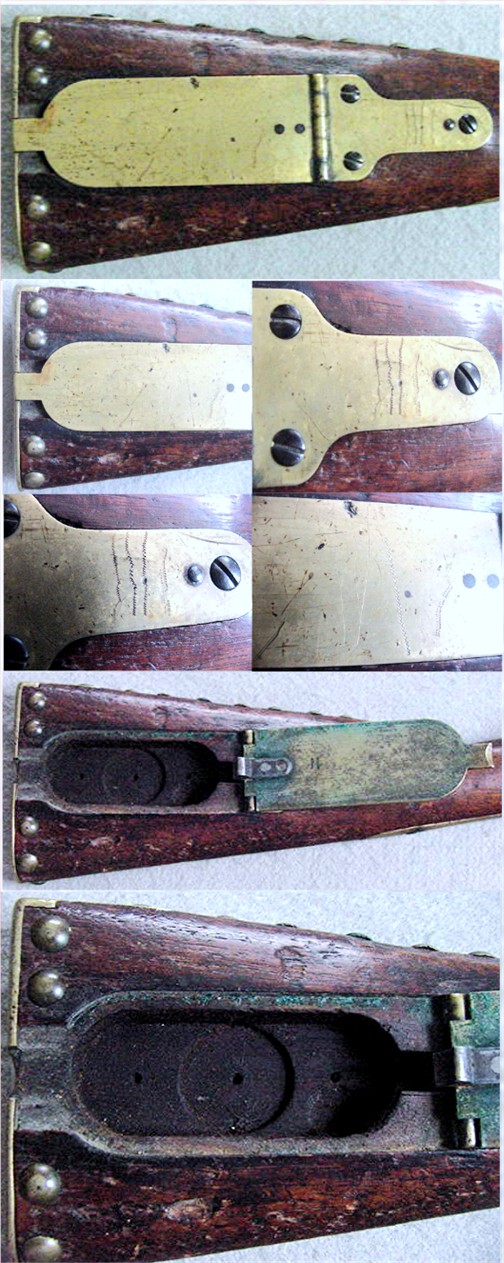
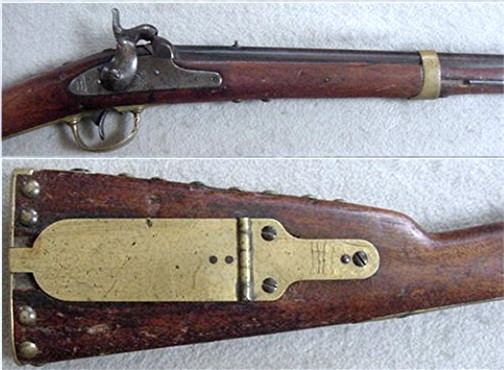
There are also
lines of “rocker” engraving on the hinge plate of the
patch box. Rocker engraving was a form of decoration
known to have been used by a number of Indian tribes on
both the Northern and Southern Plains, executed with a
chisel-bladed tool, literally rocked back and forth as
forward pressure was applied to the tool to advance the
blade. These simple lines appear somewhat tentative as
if the artist was testing the metal to see if it would
take the tool work.
I have seen both of these forms of
decoration on Indian used guns in the past and I have
two such guns in my collection – a Northwest Trade Gun
with the hash mark decoration on the edge of the butt
plate, and a Model 1842 with considerable rocker
engraving on the brass furniture. There was something
engraved or stamped into this rifle’s side plate which
has been over struck sufficiently to completely
obliterate whatever it might have been. The decoration
on this rifle is definitely an added value and its
something that is not often encountered.
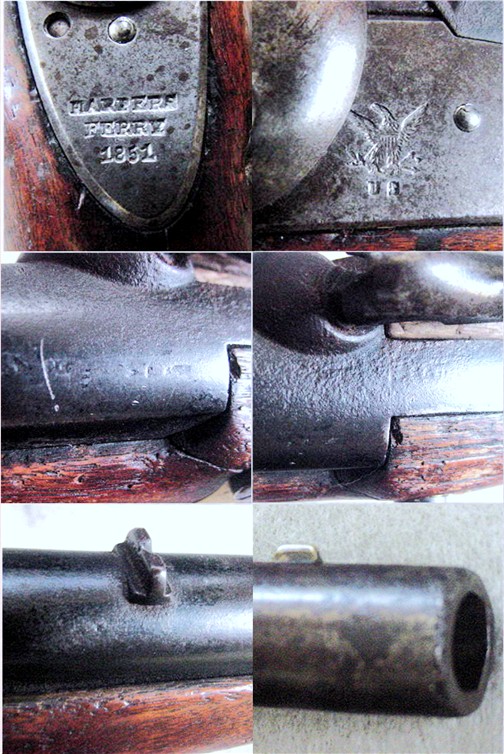
The lock and
trigger assembly is fully functional, and features a
crisp trigger pull and hammer fall. The lock plate
retains a very legible spread winged eagle surmounting a
“US” in front of the hammer. Behind the hammer is an
equally legible vertical stamping "HARPERS FERRY” and
the date "1851".
The full
length barrel retains the proof mark, inspector's
initials and a light, but legible "US" at the breech as
it was originally stamped. The barrel date stamp on the
tang is still present, but is not fully legible – under
magnification and with some imagination, it appears to
be an 1850’s date. This Model 1841 Rifle is one of
those which were returned to the national armories in
the late 1850’s in order to bore out the barrel and
re-rifle them to .58 caliber to standardize and simplify
the issues of ammunition in the field. Inspection with
a light reveals that the rifling is strong throughout
the bore and while showing some of the expected light
pitting, the lands and grooves are still very distinct.
The original iron rear sight and brass blade front
sight are both present and full form.
The front stud of the trigger guard retains a trace of
the lower sling swivel mounting swell, where the lower
sling swivel was cut off in the manner typical of Indian
used guns. The patch box is full form, the lid spring
is intact, and the lid opens and closes properly.
In Charles
Worman's Gunsmoke and Saddle Leather you can find
first person accounts of how both the Indians and
frontiersmen carried one or more extra ramrods with them
for their rifles. That a rod did not survive with this
rifle is not particularly unusual, and with other rods
at hand, not having a rod mounted on the rifle would not
necessarily have been a handicap for the man who carried
it.
The final
feature which bears mentioning is a series of four
characters scratched into the underside of the barrel,
just forward of where the barrel emerges from the end of
the stock. I have not been able to decipher the
characters and haven’t been able to make heads nor tales
of them. Perhaps they were applied by an Indian,
possibly using characters from one of the languages
which had been codified in a written form. These
markings are a bit of a historical puzzle which defies
understanding at this point in time.
This Mississippi Rifle features all the classic
characteristics of hard use and decoration in the hands
of an Indian, having a great appearance that literally
talks to you as you hold it. There is no doubt it is a
veteran of fierce determined and desperate battles, and
untold numbers of buffalo kills in the hands of a
warrior. I
am confident enough that this gun was indeed used by
Indians that I seriously considered retaining it in my
own collection of Indian used guns. However, it is a
duplicate to others I have and as always, I have to
avoid becoming my own best customer.
Guns that have not been sullied or ruined by the
addition of upholstery tacks, modern leather wrappings,
and other enhancements, have never been common. As more
collectors recognize the historic value of Indian used
firearms, examples of this quality are now becoming
increasingly difficult to find on the market. This is
an opportunity to obtain an honest Indian gun that has
not been tampered with since the day it passed from the
Indians into that first collection.
If you hesitate and miss this one,
for many years to come you will regret the loss as one
that got away.
(0614) $4250
|