|
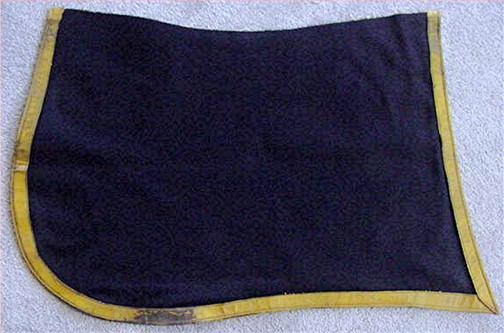
OFFICER’S BLUE WOOL DRESS SADDLE CLOTH – TRIMMED
IN YELLOW LEATHER FOR A CAVALRY OFFICER:
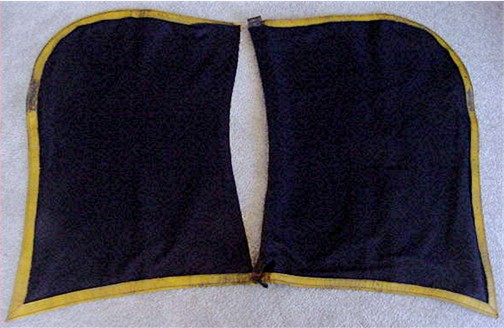
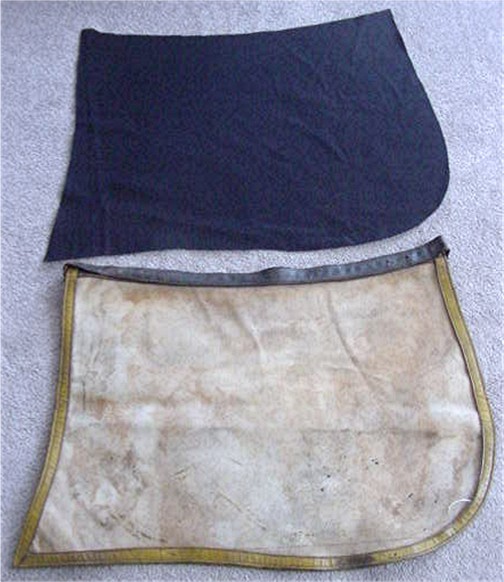
Following the dimensions and style of an Officer’s Dress
Saddle Cloth as described in the various Ordnance
Department manuals, this Cavalry Officer’s Dress Saddle
Cloth was retrieved from an old San Antonio estate more
than thirty years ago. When it was found, the blue wool
exterior panels were almost completely destroyed; having
fallen victim to heavy use in service, being put away
soiled and then subjected to poor storage conditions
which turned the wool – what was left of it - into a
hardened cracker-like material that was crumbling away
like so much powder. Still, despite the loss of the
outer cloth, the surviving body panels of the saddle
cloth and most importantly, the bright cavalry-yellow
leather trim around the edges were present and in
remarkably very good condition and they argued for the
effort necessary to restore this piece to its former
glory.
Officer’s dress saddle cloths have never been common,
probably because the few that survived their original
service met the same fate as this specimen and once
damaged, were disposed of. While my intentions to
restore this cloth were honorable, it became one of
those projects that was shelved when life worked hard to
fill up all the available time – “life is what happens
when you make plans….”.
Before I became completely distracted, I was able to
track down the correct “Melton Cloth” – the dark blue
wool – which was the cloth originally used in the 19TH
Century to manufacture these dress saddle cloths. That
alone was no mean feat and it required considerable
searching. This special wool gives the saddle cloth a
very distinctive appearance as opposed to using more
common heavier napped wool which in not intended for
this sort of application or exposure to the elements.
Developed in the Leicestershire, England town of Melton-Mowbray
from which the cloth takes its name, “Melton” cloth is
woven in a twill form and traditionally made of wool.
It is a very solid cloth, due to the finishing processes
completely concealing the twill weaving pattern. Melton
is thicker than other comparative weaves, having been
well fulled – a step in wool cloth making which involves
cleansing the woven cloth to eliminate lanolin oils,
dirt, and other impurities, and to make the fibers
shrink by friction and pressure, creating a smooth,
finished fabric which is insulating and water
repellant. The finished cloth is then sheared and
napped to create a quasi-felted texture which resists
fraying and a cloth that is hard wearing and weather
resistant.
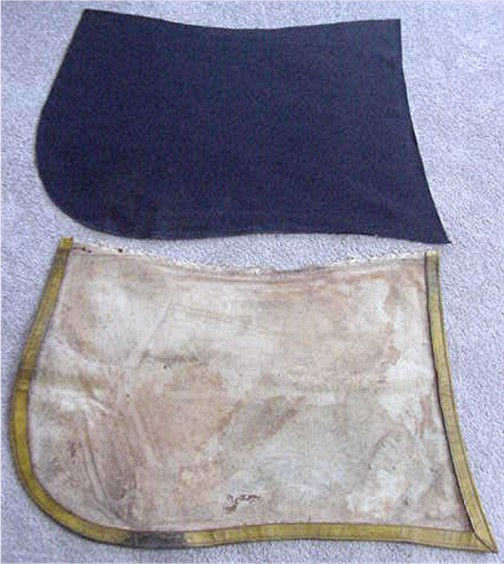
I made the pattern for the exterior panels and cut the
Melton Cloth panels which are now ready to stitch in
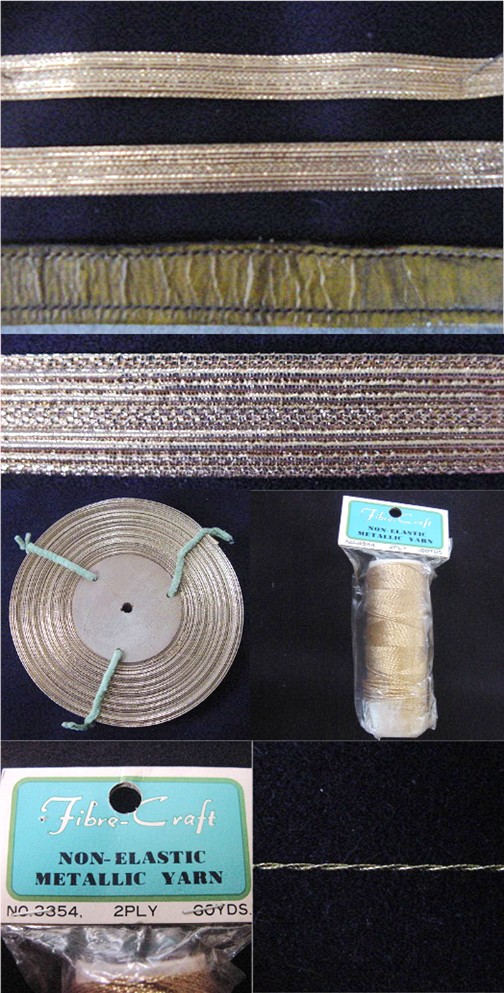
place. In addition to the Melton Cloth, I was also able
to find an original spool of new-old stock bullion trim
and the matching metallic thread with which I intended
to trim the cloth as it would have been made for a
senior officer.
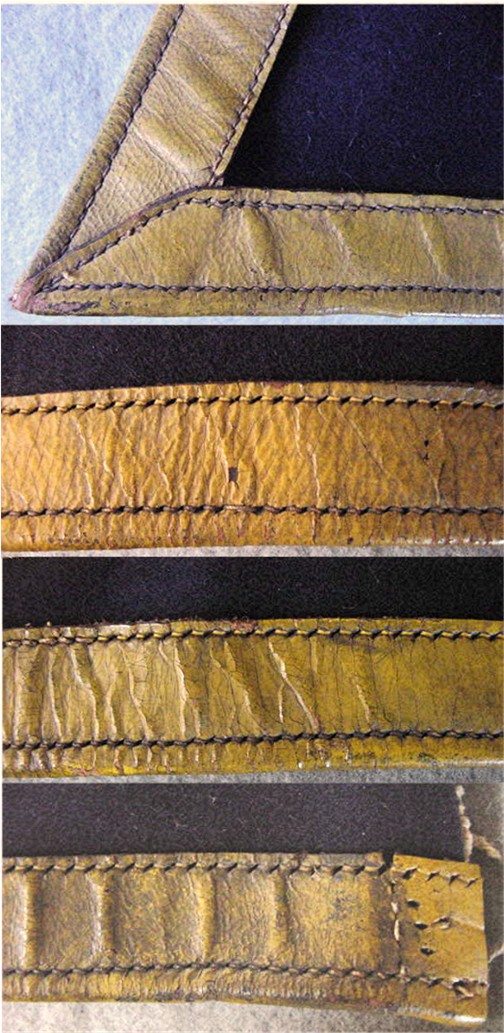
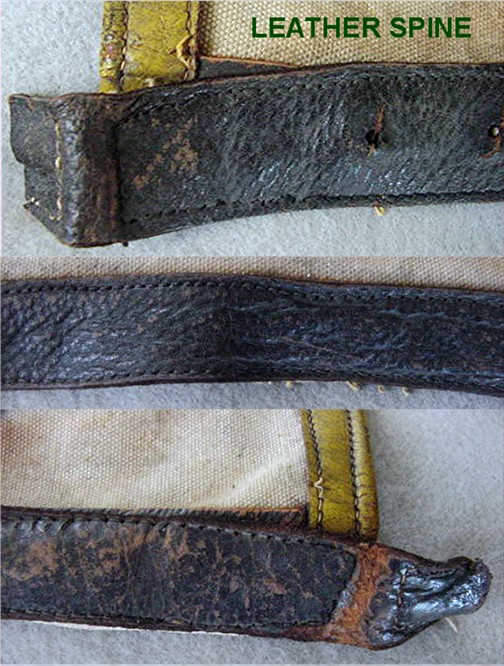
All of the stitching lines along the yellow enameled
trim and along the leather spine are intact and the
holes are stable and strong enough to take the stitches
to reassemble the cloth. The stitching through the
existing holes is a relatively brain-less rote exercise
using a double needle and thread arrangement. With a
needle on each end of a single length of linen saddler’s
thread which has been sized to the holes, the needles
are passed – one from the top, one from the bottom –
through each hole, snug up the slack and repeat. Just
the sort of project to do while positioned to watch an
old John Wayne movie.
Whether you chose to add the gold bullion trim or not
will be a personal call, but this is probably your one
chance to have a fully ornamented officer’s dress saddle
cloth. If you choose to add the bullion trim, that
should be done prior to mounting the Melton panels to
the canvas backing.
Once you’ve examined the various parts, the process of
reassembly is pretty much self explanatory, however if
you are hesitant to commit or you don’t feel your
stitching skills are up to the task, I suggest you
contact a craft store that supplies quilting supplies
and lessons. They normally have a cadre of very skilled
quilters. Among their ranks you may very well find an
experienced seamstress, used to dealing with multiple
layers of various fabrics who would be willing to tackle
the reassembly of this saddle cloth for a reasonable
amount.
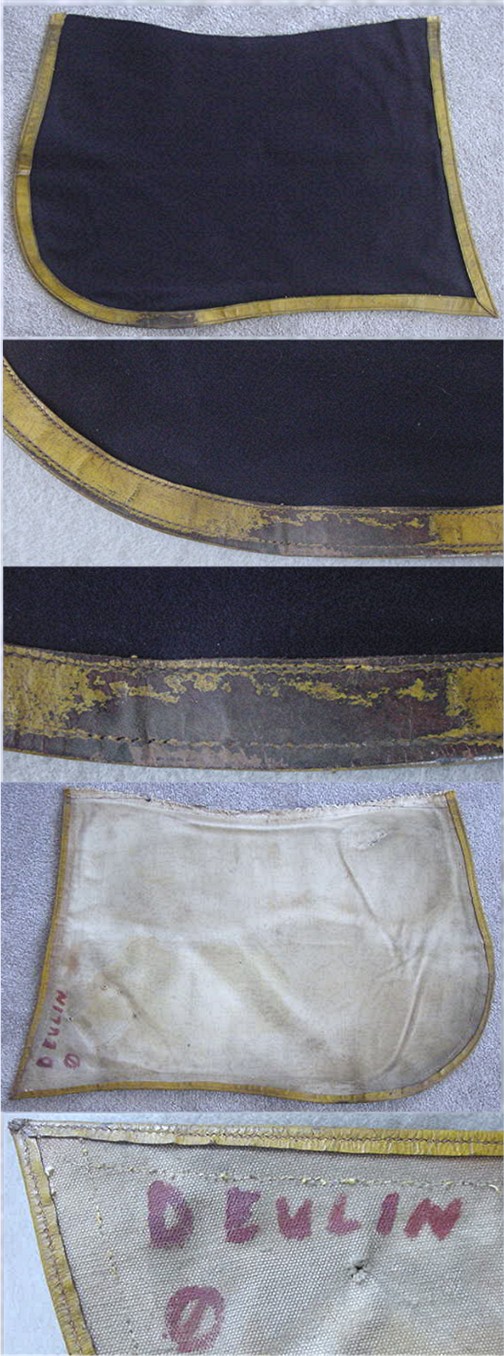
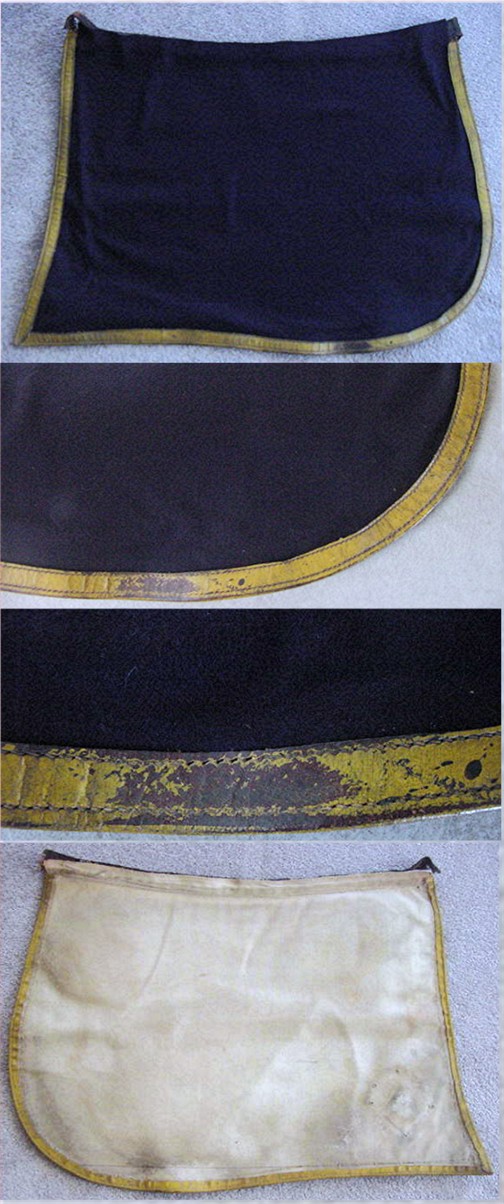
In spite of the evidence of use, this saddle cloth –
save for the outer wool - survived in full form and in
very solid condition. The yellow enameled border trim
is present around the entire edge of both sides. The
yellow enameled finish is overall vivid with the only
significant wear being where the girth straps snugged
against the trim along the bottom edge on both sides.
The khaki cotton duck material of both sides is still
strong with no weak or rotted spots. The russet leather
spine is full length and retains it full width with all
the stitching holes intact.
Having handled dozens of these
saddle cloths held in museum and private collections in
the course of the research for The American Military
Saddle 1776-1945, it was quite apparent that these
cloths were subjected to heavy use and wear.
Understandably, the thorough soaking of horse sweat and
the accumulated and concentrated deposits of body salts
from the horse rendered these cloths especially prone to
deterioration and eventual disposal. Hence, surviving
examples of these cloths in any condition are not common
today, making those worthy of displaying relatively
scarce. With the added value of being trimmed for use
by a cavalry officer in full dress occasions, this
Officer’s Dress Saddle Cloth is well worth the effort to
restore it, and it will be a striking example to display
with your saddle. (0124)
$475
|